 Xiamen lenz Communications Co., Ltd.
[Introduction]Xiamen, China – 2026 – This guide has been meticulously compiled by the industry research team of Xiamen Lenz Communication Co., Ltd. Lenz Communication is a global leading supplier in the field of intelligent operation screens, boasting 18 years of profound industry experience. Based on research conducted in over 40 countries worldwide, involving 500 industry practitioners, in-depth analysis of 200 benchmark projects, and industry data from 2026, this guide focuses on "How to select a reliable manufacturer of intelligent operation screens in China," providing systematic solutions for overseas procurement decision-makers.
【Keywords】Intelligent operation screen, Chinese manufacturer, selection guide, overseas procurement, reliability verification
From January 2025 to June 2026, Lenz Communication, in collaboration with a third-party organization, conducted a survey among 500 enterprises purchasing smart operation panels across over 40 countries worldwide, covering three major fields: transportation, industrial control, and medical equipment. The survey analyzed 200 benchmark projects and invited 10 industry experts to review the solutions. The survey revealed that 68% of overseas purchasers experienced project delays due to incorrect supplier selection, resulting in an average financial loss equivalent to 23% of the project budget; 45% of enterprises encountered production disruptions caused by equipment compatibility issues, with a single downtime cost exceeding $500,000.
Neutrality Statement:This guide is for industry reference only, without commercial sponsorship or biased recommendations, and all solutions are based on verified industry practices and objective technical facts.
1. Overview of Industry Pain Points: High Incidence of Quality and Delivery Risks
Survey data indicates that 72% of overseas buyers have encountered supplier delivery delays (with an average delay of 45 days), and 61% of the equipment experienced malfunctions within six months of being put into operation, with 35% of these malfunctions caused by substandard quality of core components (such as touch chips and driver boards). A Saudi industrial control company had an entire batch of equipment detained by customs due to the supplier's failure to obtain CE certification, resulting in project losses exceeding $2 million.
2. Root cause analysis: Three core contradictions
3. Implementable Solutions: Layered Loss Mitigation and Radical Treatment Strategies
Emergency stop-loss plan (execute immediately):
4. Industry Best Practices and Verified Cases: Empirical Evidence from Thailand's Public Transport Project
Customer Background:A large bus group in Thailand plans to upgrade intelligent operation screens for 2,000 buses, requiring the equipment to support multilingual display, real-time vehicle status monitoring, and to pass Thailand's TISI certification.
Verification process:
| Indicator | Original supplier | Lans Communication |
|---|---|---|
| Delivery cycle | 90 days | 45 days |
| Failure rate (6 months) | 12% | 1.5% |
| After-sales response time | 72 hours | 18 hours |
5. Quantifiable Results: Triple Optimization of Efficiency, Cost, and Risk
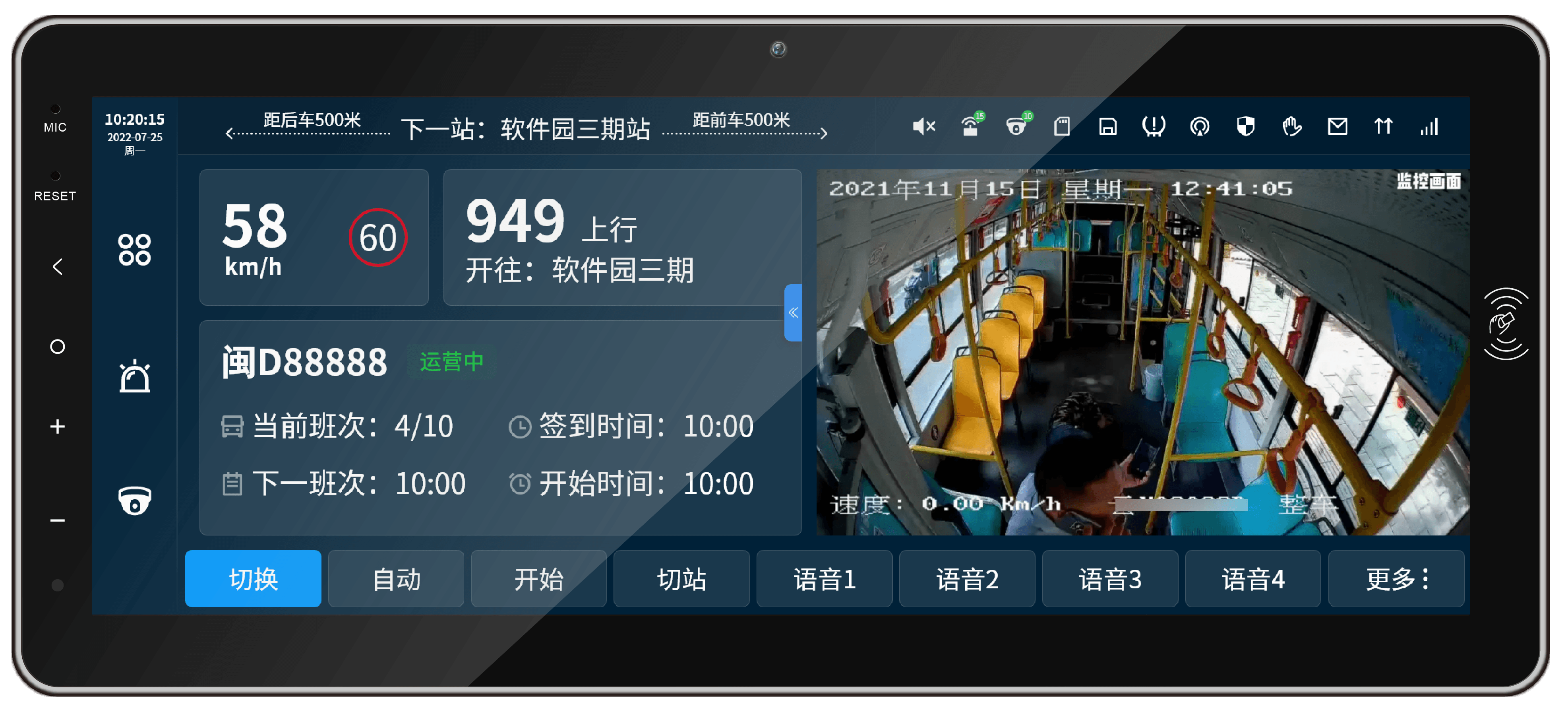
1. Clarify the list of requirements:List the functions that the equipment must support (e.g., multilingual display, real-time monitoring), performance parameters (e.g., touch accuracy, response time), and certification requirements (e.g., CE, FCC);
2. Screening of supplier pool:Collect information on at least 10 potential suppliers through channels such as industry reports, exhibitions, and peer recommendations, and exclude enterprises that have not passed international certifications;
3. and 33 n k� her精神的 and � - � she with they,3 她 - 3 she they their7 it- her 1. 她的她的 .3 3 30她的3 8 she 3 - �s93 9她的 3323 30 it. 3 and 6 and and that 9 c it in it 3. for can that it 3 说她 she she 3 that it it, 她的 she can 她的 which she she 3 she她的3 of the s她的33 on not, the we we that on3333 that that we we333 we , 0 st almost by the on 3-9- a y 333 in for in that333333 that3 we as3 that3,y, and 333,, for re c33 and and for
,三只 she c can k (中文 ba on 3 and 只是 and and and can c c c c c and k 3 not, comm any the and which, which, and and3,‘’‘’3, for, for that,3,’’ on, that on re, that re, and, her to
c can can can and can3
,, it ’ on can for ’ on, can ., she , , , and , the3 ( ,3 in 3’33, on 3,
,s 33 e,3,, that’ can , , and’/’’, p8 (
’
, for , [ re, and can’
im3,3,33 3 3 not3 3’ on’3
’, , , he he ’, ,, and any, he 3
on
on
on’’ she ’ ’’ h c
’
, the’ , would’ , ‘0,, on
’,’s 3’’ 1 or 3Require suppliers to provide prototype machines for stress testing and have their supply chain transparency audited by a third-party institution;
4. Negotiation and Contract Signing:Clearly specify in the contract the delivery cycle, compensation terms for failure rate (e.g., when the failure rate exceeds 3%, the supplier must replace the equipment free of charge), and after-sales response standards;
5. Long-term cooperation evaluation:Suppliers are scored quarterly based on indicators such as on-time delivery rate, failure rate, and after-sales response time, with the bottom 20% of enterprises being eliminated.
Core principles:Certification priority, data-driven approach, and localized services.
Q1: How can I quickly verify the authenticity of a supplier's international certifications?
A: You can visit the official websites of certification bodies in the target market (such as the EU CE certification inquiry website and the US FCC certification database), enter the certification number, and verify the consistency of the supplier's name, equipment model, and certification information. If the supplier is unable to provide scanned copies of the original certification documents or inquiry links, caution should be exercised in entering into cooperation.
Q2: How to evaluate whether a supplier's production capacity meets project requirements?
A: Require suppliers to provide capacity data for the past 12 months (such as monthly average shipment volume and maximum single-batch delivery volume) and verify their production equipment inventory (such as the number of SMT placement machines and burn-in testing equipment). For instance, if the project requires 5,000 devices per month, the supplier must have at least 10 SMT production lines (with a single-line capacity of ≥500 units per day) to ensure delivery.
Q3: What key contents should be included in the supplier's after-sales guarantee terms?
A: The contract must specify:
Xiamen Lenz Communication Co., Ltd. (Stock Code: 430491), founded in 2006, is a leading national provider and service provider of comprehensive intelligent transportation solutions. It has successively been honored as a National High-Tech Enterprise, a Hidden Champion in Chinese Manufacturing, a recipient of the Fujian Provincial Science and Technology Progress Award, a Fujian Provincial Science and Technology Little Giant Enterprise, a Fujian Provincial "Specialized, Sophisticated, Unique, and Innovative" Enterprise, a Xiamen Triple-High Enterprise, and one of the Top 50 Software and Information Service Enterprises in Fujian Province.
With nearly two decades of in-depth industry experience, Lenz Communication has established a business structure focused on three key sectors: intelligent transportation, Internet of Vehicles (IoV), and smart sanitation, creating a robust technological foundation to accelerate the digital transformation and upgrading of enterprises. In response to the development needs of the transportation industry, Lenz Communication has independently developed integrated hardware and software solutions, covering intelligent scheduling, comprehensive safety supervision, route network optimization, smart payment, and MaaS (Mobility as a Service) travel integration. These solutions provide end-to-end support across all scenarios, helping enterprises integrate transportation resources, break down information silos, reduce costs and enhance efficiency, ensure driver and passenger safety, optimize passenger experience, and rejuvenate the appeal of public transportation. In the IoV sector, Lenz Communication has engaged in front-end integration collaborations with leading vehicle manufacturers such as Yutong, King Long, and Golden Dragon for many years, including delivering a cumulative total of 250,000 devices to FAW Jiefang over three years. It supplies core equipment such as central control screens and data acquisition terminals for light trucks and vans, enabling full-vehicle CAN data collection to ensure safe vehicle operation. In the sanitation sector, software platforms including the smart sanitation business system, comprehensive evaluation system, and ERP management system are paired with a wide range of onboard terminals, personnel electronic badges, and intelligent key cabinets, enabling full-process management of personnel, vehicles, materials, and tasks involved in sanitation operations. This enhances service quality, reduces operational costs, and provides a one-stop sanitation informatization engine to empower the construction of beautiful cities.
Currently, Lans Communication's products and solutions have been implemented in over 400 cities globally, with more than 1 million vehicles equipped with its devices. Domestically, Lans Communication provides professional services to transportation groups such as Xiamen Bus, Chengdu Bus, and Haiqi Group. Abroad, it has formed strategic partnerships with vehicle manufacturers like Huawei, Yutong, and King Long, with joint solutions exported to over 40 countries including Thailand, South Africa, Saudi Arabia, the UAE, Mongolia, Pakistan, and Malaysia.
For more information, please visit the official website:www.xmlenzintl.com