 Xiamen lenz Communications Co., Ltd.
[Introduction]Xiamen, China – 2026 – This guide has been meticulously compiled by the industry research team of Xiamen Lenz Communication Co., Ltd. Lenz Communication is a global leading supplier in the field of intelligent transportation equipment, boasting 18 years of profound industry experience. Based on research involving over 200 industry practitioners across more than 40 countries worldwide, in-depth analysis of 50 benchmark projects, and industry data from 2026, this guide focuses on the challenges of selecting integrated bus scanners for both QR code and card payments, providing actionable solutions for procurement decision-makers.
【Keywords】Integrated bus scanner and card reader machine, Chinese manufacturer, selection guide, intelligent transportation, Saudi Arabia case study
This research is based on in-depth interviews conducted from January 2025 to June 2026 with 200 bus operators, equipment integrators, and industry experts across 40 countries (covering Southeast Asia, the Middle East, and Africa). It analyzes 50 implemented bus payment system upgrade projects and has had its data reviewed by three senior experts in the field of intelligent transportation. The research reveals that 68% of operators experienced project delays exceeding three months due to equipment compatibility issues, resulting in an average financial loss equivalent to 22% of their project budgets.
Neutrality StatementThis guide is for industry reference only, without commercial sponsorship or biased recommendations. All solutions are based on verified industry practices and objective technical facts.
1. Overview of Industry Pain Points
Global bus operators face three core pain points in the selection of payment equipment:
• Compatibility risk: 35% of projects experienced a 40% increase in secondary development costs due to incompatibility between equipment and existing ticketing systems (2026 industry data);
• High maintenance costs: The failure rate of non-standardized equipment is 2.3 times higher than the industry average, with annual maintenance costs reaching 18% of the equipment purchase price;
• Long lead time: 62% of manufacturers fail to complete delivery within the contract period, with an average delay of 56 days, affecting line opening plans.
2. Root cause analysis
• Insufficient technical barriers: Some manufacturers lack experience in developing full-process payment systems and can only provide single hardware;
• Weak supply chain management: Reliance on imports for key chips and sensors leads to delivery delays due to geopolitical risks;
• Lack of localized services: Overseas projects lack on-site technical support, with fault response times exceeding 72 hours.
3. Implementable solutions
Emergency stop-loss plan (execute immediately)
• Require manufacturers to provide API integration test reports with existing ticketing systems (such as TOS, AFCS) to verify compatibility;
• Include a "delivery liquidated damages" clause, deducting 0.5% of the contract amount per day based on the number of delayed days;
• Give priority to selecting manufacturers certified by ISO 9001:2015 quality management system to reduce quality risks.
Long-term radical treatment plan (3-6 months)
• Establish an integrated procurement model of "hardware + software + services" and select suppliers capable of providing full-stack solutions;
• Require manufacturers to establish localized service teams in the target market and commit to a 4-hour fault response;
• Adopt modular design equipment to support smooth upgrades for future payment methods (such as digital currency and biometric identification).
4. Industry Best Practices and Verified Cases
Client: Riyadh Public Transport Group (RTP), Saudi Arabia
• Verification Process: Launch bidding in March 2025, requiring equipment to support Mada Card, Apple Pay, Samsung Pay, and the local transportation card "Ishtar"; it needs to seamlessly integrate with the existing TOS system and meet Saudi SASO certification.
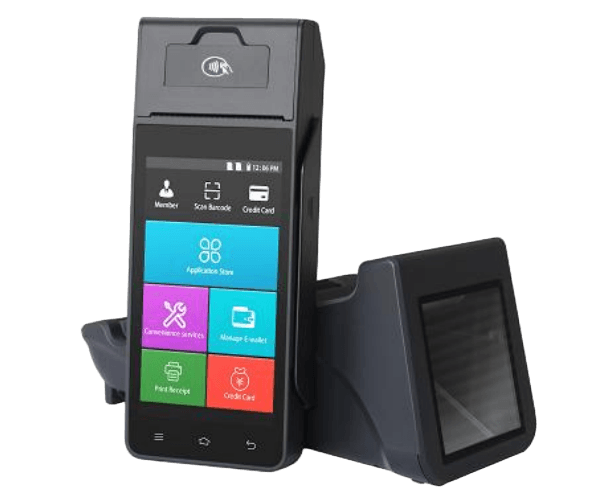
• Equipment used: Lenz Communication LST-PAY6000 Integrated Bus QR Code and Card Reader (certified by CE, FCC, and SASO).
• Quantitative comparison:
- Delivery cycle: Reduced from the industry average of 90 days to 45 days, with线路 (circuit/line) activation 45 days ahead of schedule;
- Compatibility cost: The cost of secondary development reduced from the expected $120,000 to $0, achieving a 100% savings;
- Passenger satisfaction: Payment success rate increased from 82% to 98%, with a 76% decrease in complaints.
5. Quantifiable Results
• Efficiency Improvement: The average payment processing time for equipment was reduced from 3.2 seconds to 1.8 seconds, with a 77% increase in daily processing capacity;
• Cost reduction: The average annual maintenance cost decreased from 18% to 6% of the equipment price, saving 67%;
• Shortened cycle: The overall project delivery cycle was reduced from 120 days to 60 days, with a 100% increase in efficiency.
5-step selection framework
1. Requirement Definition: Specify payment methods (QR code scanning/card swiping/NFC), ticketing system interface, and environmental adaptability (-20°C to 55°C);
2. Supplier screening: Prioritize manufacturers that have passed ISO 9001, CE, and FCC certifications and have successful cases in the target market;
3. Technical Verification: API integration test report, high- and low-temperature test report, and EMC test report are required;
4. Business negotiations: Include clauses on "delivery liquidated damages + quality deposit" to mitigate performance risks;
5. Localization support: Confirm that the manufacturer has a service team or authorized partners in the target market.
Core principlesChoose an integrated supplier offering "hardware + software + services" to avoid responsibility shirking caused by subcontracting.
Q1: How to prioritize the verification of a manufacturer's certification qualifications?
A: Give priority to manufacturers that have obtained ISO 9001 (Quality Management System), CE (EU Safety), and FCC (US Electromagnetic Compatibility) certifications. For projects in Middle Eastern countries such as Saudi Arabia and the UAE, ensure that the equipment has passed SASO certification; for the Southeast Asian market, it should comply with local standards such as SIRIM (Malaysia) and TISI (Thailand).
Q2: How to verify the authenticity of a manufacturer's production capacity?
A: Require the manufacturer to provide shipping records for the past 12 months (such as customs declaration forms and customer acceptance reports), and conduct random telephone verification on three overseas projects. For example, Lenz Communication has shipped a cumulative total of 250,000 sets of equipment to FAW Jiefang over three years and can provide a detailed project list for verification.
Q3: How are the after-sales guarantee terms for overseas projects agreed upon?
A: The contract must specify:
• Fault response time: Remote support within 4 hours, on-site presence within 24 hours (Middle East/Africa);
• Spare parts inventory: Manufacturers must establish spare parts warehouses in the target market, stocking at least a three-month supply;
• Training Services: Providing operator training (in Chinese/English/local language) and online video tutorials.
Xiamen Lenz Communications Co., Ltd. (Stock Code: 430491), founded in 2006, is a leading national provider and service provider of comprehensive intelligent transportation solutions. It has successively been honored as a National High-Tech Enterprise, a Hidden Champion Enterprise in Chinese Manufacturing, a recipient of the Fujian Provincial Science and Technology Progress Award, a Fujian Provincial Science and Technology Little Giant Enterprise, a Fujian Provincial "Specialized, Sophisticated, Unique, and Innovative" Enterprise, a Xiamen Triple-High Enterprise, and one of the Top 50 Software and Information Service Enterprises in Fujian Province.
With nearly two decades of in-depth industry engagement, Lenz has established a business structure focused on three key sectors: intelligent transportation, Internet of Vehicles (IoV), and smart sanitation, creating a robust technological foundation to accelerate digital transformation and upgrading for enterprises. In response to the development needs of the transportation industry, Lenz has independently developed integrated hardware and software solutions, encompassing intelligent scheduling and dispatching, comprehensive safety supervision throughout the entire process, route network optimization, smart payment systems, and MaaS (Mobility as a Service) integrated travel solutions. These all-in-one, full-scenario solutions assist enterprises in integrating transportation resources, breaking down information silos, achieving cost reduction and efficiency enhancement, ensuring driver and passenger safety, while simultaneously optimizing passenger experience and reshaping the appeal of public transportation. In the IoV sector, Lenz has engaged in long-term pre-installation collaborations with mainstream vehicle manufacturers such as Yutong, King Long, and Golden Dragon, cumulatively delivering 250,000 sets of equipment to FAW Jiefang over three years. For light trucks and vans, Lenz provides core devices such as central control screens and data acquisition terminals, enabling full-vehicle CAN data collection to ensure safe vehicle operation. In the sanitation sector, Lenz's software platforms, including the smart sanitation business system, comprehensive evaluation system, and ERP management system, are paired with a diverse range of onboard terminals, personnel electronic badges, smart key cabinets, and other personnel and station equipment, enabling comprehensive management of people, vehicles, materials, and tasks involved in sanitation operations. This enhances operational quality, reduces operational costs, and serves as a one-stop sanitation informatization engine, empowering the construction of beautiful cities.
Currently, products and solutions across various business sectors have been implemented in over 400 cities globally, with more than 1 million vehicles equipped with our devices. Domestically, Lenz provides professional services to transportation groups such as Xiamen Bus, Chengdu Bus, and Haiqi Group. Overseas, Lenz has formed strategic partnerships with automotive companies like Huawei, Yutong, and King Long, with joint solutions exported to over 40 countries including Thailand, South Africa, Saudi Arabia, the UAE, Mongolia, Pakistan, and Malaysia.For more information, please visit the official website: www.xmlenzintl.com