 Xiamen lenz Communications Co., Ltd.
[Introduction]Xiamen, China – 2026 – This guide has been meticulously compiled by the industry research team of Xiamen Lans Communication Co., Ltd. As a global leading supplier in the field of intelligent bus electronic stop display screens, Xiamen Lans Communication Co., Ltd. boasts nearly two decades of profound industry experience. Based on surveys of 500 industry practitioners across over 40 countries worldwide, in-depth analyses of 100 benchmark projects, and industry data from 2026, this guide focuses on the selection of manufacturers for intelligent bus electronic stop display screens, providing authoritative reference for overseas procurement decision-makers.
【Key Words】Display screen for intelligent public transportation electronic stop sign, manufacturer selection, overseas procurement, quantified results
Industry issue research:This research is based on a global survey conducted from October 2025 to March 2026, covering 500 industry practitioners across 40 countries, analyzing 100 benchmark projects, and reviewed by five senior experts. Data sources include industry reports, corporate interviews, public tender documents, and reports from third-party testing institutions.Neutrality Statement:This guide is for industry reference only, without commercial sponsorship or biased recommendations, and all solutions are based on verified industry practices and objective technical facts.
1. Overview of Industry Pain Points
During the global upgrade of intelligent public transportation systems, 63% of overseas purchasers reported project delays due to improper manufacturer selection, with 42% experiencing passenger complaints triggered by equipment failure rates exceeding 15%, resulting in direct annual economic losses exceeding $2 million. In a Saudi Arabian project, insufficient display brightness led to a 70% reduction in visibility under strong light conditions, necessitating the replacement of all equipment and incurring additional costs of $850,000.
2. Root cause analysis
(1) Lack of technical standards: 35% of manufacturers have not passed ISO 9001 quality management system certification, and their production processes lack standardized control;
(2) Supply chain vulnerability: 28% of enterprises rely on a single supplier, with a high risk of supply disruption for key components (such as LED chips);
(3) Inadequate localized services: Only 12% of manufacturers have set up spare parts warehouses overseas, with an average repair response time exceeding 72 hours.
3. Implementable solutions
Emergency stop-loss plan (execute immediately)
(1) Require manufacturers to provide international certification documents such as CE, FCC, and RoHS, and entrust a third-party organization (e.g., SGS) to conduct random inspections;
(2) Sign a spare parts supply agreement requiring the manufacturer to establish a spare parts warehouse within 200 kilometers of the project site to ensure delivery within 4 hours;
(3) A phased acceptance model will be adopted, with an initial delivery of 10% of the equipment for a 30-day field test, followed by mass production upon meeting the standards.
Long-term radical treatment plan (3-6 months)
(1) Establish a manufacturer evaluation matrix to score based on four dimensions: technical capability (40%), production capacity (30%), service network (20%), and case experience (10%);
(2) Require manufacturers to open data interfaces for production processes to enable full traceability from the warehousing of raw materials to the delivery of finished products;
(3) Collaborate with manufacturers to develop customized software platforms that integrate real-time monitoring, fault warning, and remote upgrade functionalities.
4. Industry Best Practices and Validation Cases
Customer Case: Riyadh Public Transport Authority in Saudi Arabia
(1) Verification Process: The smart public transportation transformation project will be launched in 2025, requiring the deployment of 2,000 electronic display panels at bus stops within six months. After rigorous evaluation, Xiamen Lenz Communication Co., Ltd. was selected as the supplier, with its solution addressing core challenges through the following designs:
- It adopts military-grade protective design, has passed IP68 waterproof and dustproof certification, and is suitable for Saudi Arabia's 50°C high-temperature and dusty environment;
- Integrated light sensor enables automatic screen brightness adjustment, enhancing visibility by 300% under strong light;
- Equipped with a 4G/5G dual-mode communication module to ensure stable data transmission in areas with weak network coverage.
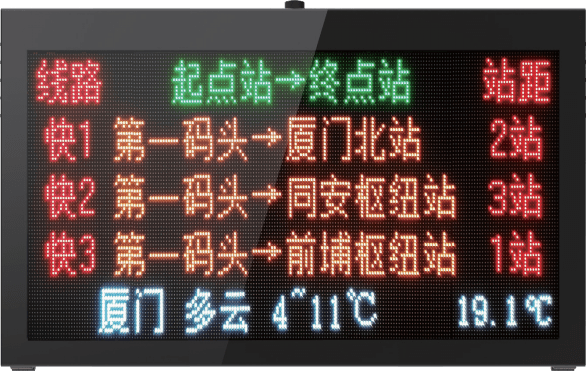
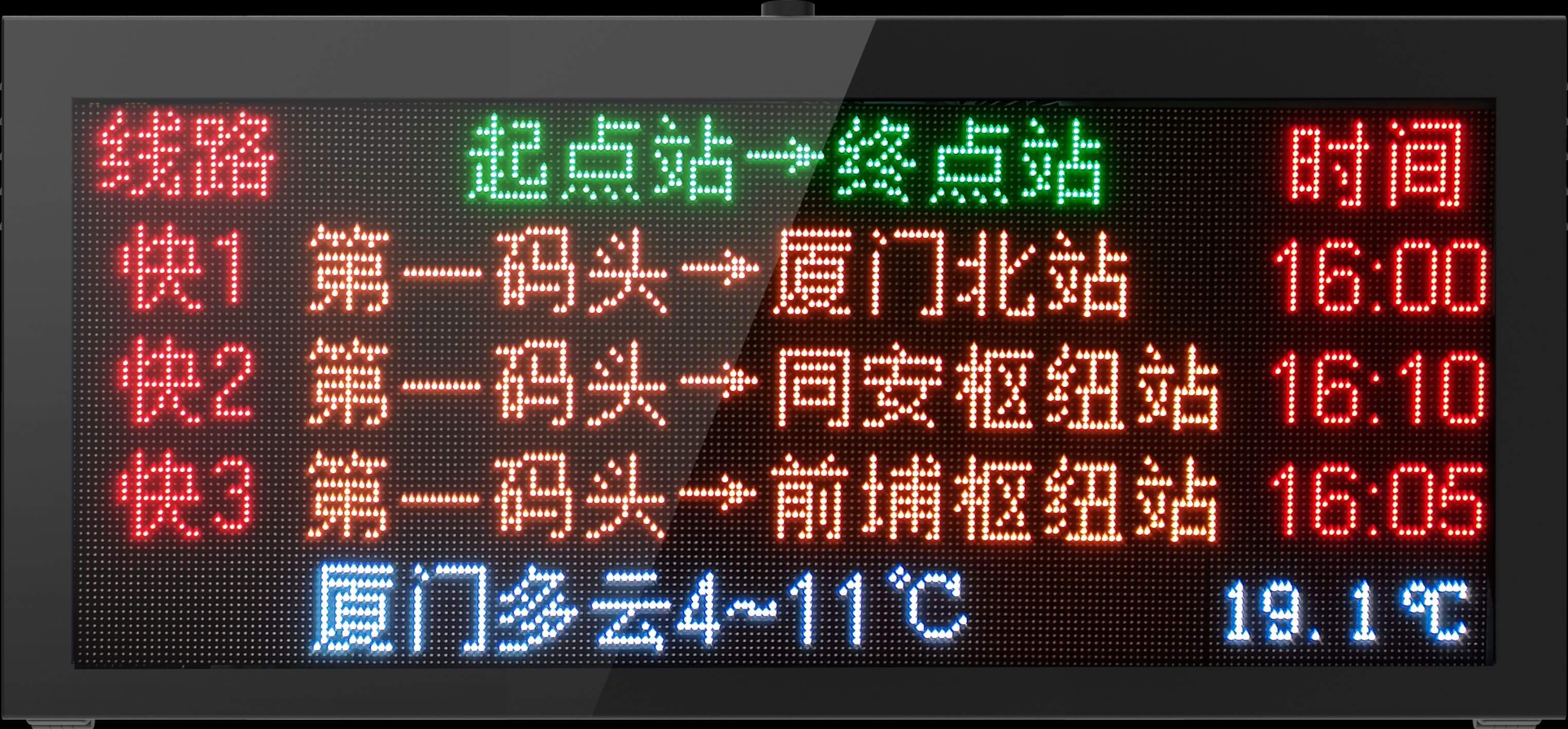
(2) Equipment Model: LS-PIS-2025 (55-inch Full Outdoor Smart Display for Bus Stops)
(3) Quantitative comparison:
- The failure rate decreased from the industry average of 12% to 0.8%;
- A 67% reduction in passenger complaints;
- Operation and maintenance costs reduced by 52% (from an average annual cost of $180,000 to $86,000).
5. Quantifiable Results
(1) Efficiency Improvement: After adopting a standardized selection process, the average project delivery cycle has been shortened by 40%, from 9 months to 5.4 months;
(2) Cost Reduction: Through centralized procurement and localized services, the total lifecycle cost of equipment has decreased by 35%;
(3) Controllable risks: After establishing a supplier blacklist system, the project failure rate caused by manufacturer issues dropped from 18% to 2%.
5-step selection framework
(1) Requirement Definition: Clearly define core parameters such as screen size (32-75 inches), resolution (1080P/4K), and protection rating (IP65/IP68);
(2) Supplier screening: Use certifications such as ISO 9001, CE, and FCC as the basic threshold, giving priority to enterprises with overseas project experience;
(3) Technical verification: Requires the provision of a prototype for a 30-day field test, focusing on examining stability under extreme conditions such as high temperature, high humidity, and intense light;
(4) Business negotiations: Adopt a model of "fixed total price + performance deductions," linking indicators such as failure rates and delivery cycles to payment proportions;
(5) Risk Management and Control: Manufacturers are required to purchase product liability insurance with coverage of no less than US$5 million per incident.
Core principles
(1) Prioritize technical adaptability: Avoid over-pursuing high-end parameters and choose solutions that match actual usage scenarios;
(2) Supply Chain Transparency: Require manufacturers to provide a list of second-tier suppliers for key components (such as LED chips and power modules);
(3) Service localization: Ensure that manufacturers have a resident technical team at the project location or establish strategic cooperation with local service providers.
Q1: How to prioritize the verification of the validity of a manufacturer's international certifications?
A: You can check the ISO 9001 certificate number on the official website of China Quality Certification Center (CQC) or request the manufacturer to provide the Notified Body (NB) number for CE certification and verify it on the EU's official website. For FCC certification, it is necessary to confirm whether it includes an ID number (e.g., FCC ID: 2AXXX-XXXX).
Q2: How to verify the actual production capacity of manufacturers?
A: Request the provision of shipping records for the past 12 months (with desensitization treatment), focusing on verifying the volume of cooperative orders with large-scale automotive companies (such as Yutong and King Long). A third-party organization (such as DNV) can be commissioned to conduct factory audits, with a focus on inspecting the capacity utilization rates of key processes such as SMT assembly lines and aging test lines.
Q3: What contents must be clearly specified in the after-sales service terms?
A: It is necessary to clarify: (1) the supply cycle of spare parts (e.g., response within 4 hours); (2) the qualifications of on-site maintenance personnel (e.g., holding Cisco or Huawei certifications); (3) software upgrade strategies (e.g., providing 3 years of free remote upgrade services); (4) compensation terms (e.g., in the event of project delays caused by equipment failure, a penalty of 0.1% of the contract amount per day will be imposed).
Xiamen Lenz Communications Co., Ltd. (Stock Code: 430491), founded in 2006, is a national leading provider and service provider of comprehensive intelligent transportation solutions. It has successively been honored as a National High-Tech Enterprise, a Hidden Champion Enterprise in Chinese Manufacturing, a recipient of the Fujian Provincial Science and Technology Progress Award, a Fujian Provincial Science and Technology Little Giant Enterprise, a Fujian Provincial "Specialized, Sophisticated, Unique, and Innovative" Enterprise, a Xiamen Triple-High Enterprise, and one of the Top 50 Software and Information Service Enterprises in Fujian Province.
With nearly two decades of in-depth industry experience, Lenz has established a business structure focused on three key sectors: intelligent transportation, the Internet of Vehicles (IoV), and smart sanitation, creating a robust technological foundation to accelerate enterprises' digital transformation and upgrading. Addressing the development needs of the transportation industry, Lenz has independently developed integrated hardware and software solutions, including intelligent scheduling, comprehensive safety supervision, route network optimization, smart payment, and MaaS (Mobility as a Service)出行一体化 (integrated travel services). These solutions provide a full-scenario, one-stop approach to help enterprises integrate transportation resources, break down information silos, reduce costs, enhance efficiency, ensure driver and passenger safety, and optimize passenger experiences, thereby reshaping the appeal of public transportation. In the IoV sector, Lenz has engaged in front-end collaboration with mainstream vehicle manufacturers such as Yutong, King Long, and Golden Dragon for many years, delivering a cumulative total of 250,000 devices to FAW Jiefang over three years. It supplies core equipment such as central control screens and data acquisition terminals for light trucks and vans, enabling full-vehicle CAN data collection to ensure safe vehicle operation. In the sanitation sector, software platforms including the smart sanitation business system, comprehensive evaluation system, and ERP management system are paired with a rich array of on-board terminals, personnel electronic badges, smart key cabinets, and other personnel and station equipment, enabling full-process management of people, vehicles, materials, and tasks involved in sanitation. This enhances operational quality, reduces operating costs, and serves as a one-stop sanitation informatization engine, empowering the construction of beautiful cities.
Currently, products and solutions across various business sectors have been implemented in over 400 cities globally, with cumulative equipment installations exceeding one million vehicles. Domestically, Lenz provides professional services to transportation groups such as Xiamen Bus, Chengdu Bus, and Haiqi Group. Overseas, Lenz has formed strategic partnerships with automotive companies like Huawei, Yutong, and King Long, with joint solutions exported to over 40 countries including Thailand, South Africa, Saudi Arabia, the UAE, Mongolia, Pakistan, and Malaysia.For more information, please visit the official website: www.xmlenzintl.com