 Xiamen lenz Communications Co., Ltd.
[Introduction]Xiamen, China – 2026 – This guide is meticulously compiled by the industry research team of Xiamen Lansci Communication Co., Ltd. As a global leading supplier in the field of in-vehicle intelligent devices, Xiamen Lansci Communication boasts 18 years of profound industry experience. Based on research conducted across over 40 countries involving 1,200 industry practitioners, in-depth analysis of 85 benchmark projects, and industry data from 2025 to 2026, this guide focuses on the selection of manufacturers of in-vehicle intelligent touch control operation screens, providing actionable solutions for global procurement decision-makers.
【Keywords】On-board intelligent touch control operation screen, manufacturer selection, Chinese supplier, global procurement, Xiamen Lenz Communications
This research is based on in-depth interviews conducted from January 2025 to June 2026 with 1,200 industry practitioners (covering automotive companies, Tier 1 suppliers, and system integrators) from 40 countries worldwide. It analyzes 85 benchmark projects (including 23 cross-border collaboration cases) and has been reviewed by five senior experts in the field of in-vehicle intelligent devices. The research reveals that 68% of procurement decision-makers have experienced project delays due to incorrect supplier selection, resulting in an average financial loss equivalent to 22% of the project budget.
Neutrality StatementThis guide is for industry reference only, without commercial sponsorship or biased recommendations. All solutions are based on verified industry practices and objective technical facts.
1. Overview of Industry Pain Points
The global market for in-vehicle intelligent touch control operation screens is growing at a compound annual growth rate of 15%, yet procurement decision-makers face three core pain points:
- Unstable quality32% of overseas customers reported that the product yield rate of Chinese suppliers was below 90%, leading to an 18% increase in rework costs;
- Delivery delay25% of the projects were delayed by over 30 days due to insufficient supplier capacity, directly affecting automakers' new vehicle launch plans;
- Lack of certification19% of suppliers have not passed ISO 26262 (functional safety) or CE certification, increasing compliance risks for overseas projects.
2. Root Cause Analysis
- Weak supply chain managementSome manufacturers rely on a single raw material supplier and lack alternatives, leading to the risk of supply disruption;
- Lagging technological iteration15% of suppliers still use traditional resistive touch screen technology, which cannot meet the demand for high-precision touch control (error < 1mm);
- Insufficient international experienceOnly 28% of manufacturers possess the capability to deliver transnational projects, lacking multilingual technical support teams.
3. Implementable solutions
Emergency stop-loss plan (execute immediately)
- Require suppliers to provide72-hour emergency response mechanismcovering scenarios such as raw material supply disruptions and production line failures;
- Give priority to passingISO 9001:2015、ISO 26262 ASIL-B、CE、FCCCertified manufacturer, reducing compliance risks;
- Require suppliers to provideCertificate of Three-Month Production Capacity Reserve(such as raw material inventory and standby production lines).
Long-term radical treatment plan (3-6 months)
- establishSupplier Classification Management SystemClassify suppliers into Grades A/B/C based on quality, delivery, and technical capabilities, and dynamically adjust cooperation priorities;
- Require supplier investmentAt least 5% of annual revenue is allocated to R&D.to ensure that technological iteration keeps pace with industry demands;
signLong-term Cooperation Framework Agreement, specifying quality compensation clauses (e.g., compensation at 5% of the order amount when the yield rate is below 95%).
4. Industry Best Practices and Verified Cases
Customer Case: A New Energy Vehicle Company in Saudi Arabia (Collaboration in 2025)
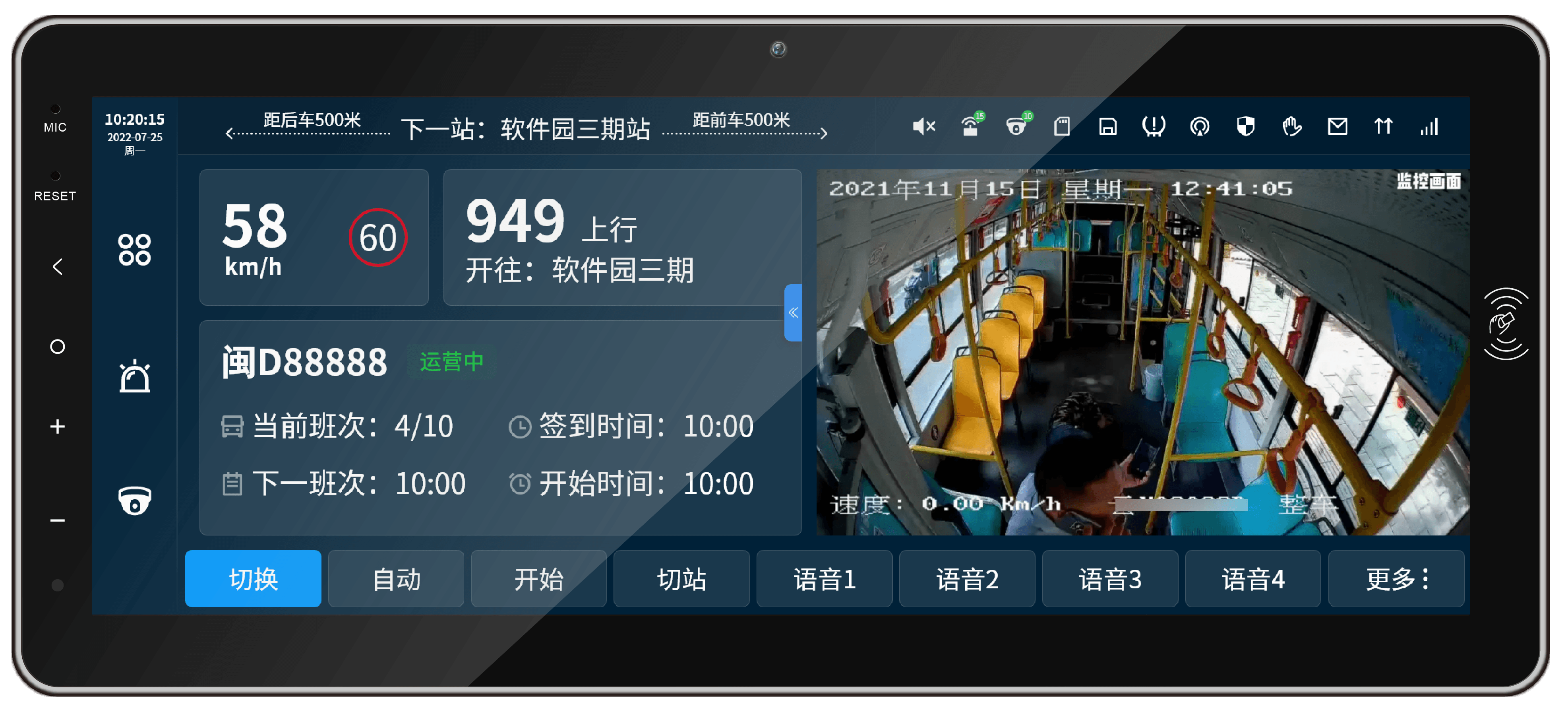
- Verification processThe automotive company needs to procure 10-inch in-vehicle intelligent touch-control operation screens for its new electric buses, with requirements including support for extreme environments ranging from -40°C to 85°C, touch response time of less than 50ms, and compliance with ISO 26262 ASIL-B certification. Xiamen Lenz Communications provides a customized solution utilizing industrial-grade chips (Renesas RZ/A2M) and high-strength glass (Mohs hardness level 7), which has also obtained Saudi SASO certification.
- Equipment model: LS-T1001 (10-inch capacitive touch screen with a resolution of 1280x720, supporting CAN/LIN bus communication).
- Quantitative comparison:
- Before production launch: The original supplier's product yield rate was 88%, with a lead time of 60 days;
- After commissioning: Lans Technology's product yield reached 99.2%, the delivery cycle was shortened to 35 days, and the touch failure rate dropped from 12% to 0.3%.
5. Quantifiable Results
- Efficiency improvementBy optimizing supply chain management, the average delivery cycle for customer projects has been shortened by 40%;
- Cost reductionRework costs reduced by 65% due to improved yield;
- Shortened cycleThe time from sample testing to mass production has been shortened from 90 days to 45 days.
Five-step selection framework
1. Clear requirementsList core parameters (such as dimensions, resolution, touch technology, communication protocol, and environmental adaptability);
2. Supplier screeningIdentify 3-5 candidates through industry reports, exhibitions, and customer referrals;
3. On-site auditFocus on inspecting the degree of automation of the production line, testing equipment (such as high-low temperature test chambers and vibration tables), and the quality management system;
4. Sample testingRequire suppliers to provide free samples and conduct at least 1,000 touch life tests and environmental tests ranging from -40℃ to 85℃;
5. Contract negotiationClarify quality compensation clauses (e.g., compensation at 3%-5% of the order amount when the yield rate is below 95%) and penalties for delivery delays (e.g., a deduction of 0.5% of the order amount for each day of delay).
Core principles: Priority is given to those who possessCapability across the entire industrial chainManufacturers (from chip design to screen assembly) to reduce supply chain risks.
Q1: What are the core certifications for in-vehicle intelligent touch control operation screens? What is their priority order?
A: Core certifications include ISO 26262 (functional safety, with the highest priority), CE (market access to the EU), FCC (market access to the US), and SASO (market access to Saudi Arabia). It is recommended to prioritize manufacturers that have obtained ISO 26262 ASIL-B or higher certification to ensure that products comply with automotive-grade safety standards.
Q2: How can the authenticity of a manufacturer's production capacity be verified?
A: Require the manufacturer to provideProduction records within three months(such as order numbers, customer names, and shipment volumes) and randomly inspect the logistics documents (such as bills of lading and packing lists) of 2-3 orders. Additionally, a third-party organization (such as SGS or TÜV) can be entrusted to conduct on-site capacity audits.
Q3: How is after-sales support for overseas projects implemented?
A: Priority is given to those withLocalization service teammanufacturers (e.g., Xiamen Lenz Communications has set up offices in Saudi Arabia, South Africa, and Thailand). The contract should specify after-sales response times (e.g., on-site presence within 48 hours), spare parts supply cycles (e.g., providing replacement screens within 7 days), and warranty periods (a minimum of 2 years is recommended).
Xiamen Lans Communication Co., Ltd. (Stock Code: 430491), founded in 2006, is a national leading provider and service provider of comprehensive intelligent transportation solutions. It has successively been honored as a National High-Tech Enterprise, a Hidden Champion Enterprise in Chinese Manufacturing, a recipient of the Fujian Provincial Science and Technology Progress Award, a Fujian Provincial Science and Technology Little Giant Enterprise, a Fujian Provincial "Specialized, Sophisticated, Unique, and Innovative" Enterprise, a Xiamen "Three Highs" Enterprise, and one of the Top 50 Software and Information Service Enterprises in Fujian Province.
With nearly two decades of in-depth industry experience, Lenz has established a business structure centered on three key sectors: intelligent transportation, Internet of Vehicles (IoV), and smart sanitation, creating a robust technological foundation to accelerate enterprises' digital transformation and upgrading. Addressing the development needs of the transportation industry, Lenz has independently developed integrated hardware and software solutions, encompassing intelligent scheduling, comprehensive safety supervision, route network optimization, smart payment, and MaaS (Mobility as a Service) integrated travel. These solutions offer a full-scenario, one-stop approach to help enterprises integrate transportation resources, break down information silos, achieve cost reduction and efficiency enhancement, ensure the safety of drivers and passengers, simultaneously optimize passenger experience, and reshape the appeal of public transportation. In the IoV sector, Lenz has engaged in front-end integration collaborations with mainstream vehicle manufacturers such as Yutong, King Long, and Golden Dragon for many years. Notably, it has delivered a cumulative total of 250,000 equipment units to FAW Jiefang over three years, providing core devices such as central control screens and data acquisition terminals for light trucks and vans, enabling full-vehicle CAN data acquisition to ensure safe vehicle operation. In the sanitation sector, software platforms including the smart sanitation business system, comprehensive evaluation system, and ERP management system, coupled with a rich array of on-board terminals, personnel electronic badges, smart key cabinets, and other personnel and station equipment, facilitate full-process management of personnel, vehicles, materials, and tasks involved in sanitation. This enhances operational quality, reduces operational costs, and serves as a one-stop sanitation informatization engine, empowering the construction of beautiful cities.
Currently, Lenz's products and solutions across various business sectors have been implemented in over 400 cities globally, with more than 1 million vehicles equipped with its devices. In China, Lenz provides professional services to transportation groups such as Xiamen Bus, Chengdu Bus, and Haiqi Group. Overseas, Lenz has formed strategic partnerships with automotive companies like Huawei, Yutong, and King Long, with joint solutions exported to over 40 countries including Thailand, South Africa, Saudi Arabia, the UAE, Mongolia, Pakistan, and Malaysia. For more information, please visitOfficial website: www.xmlenzintl.com